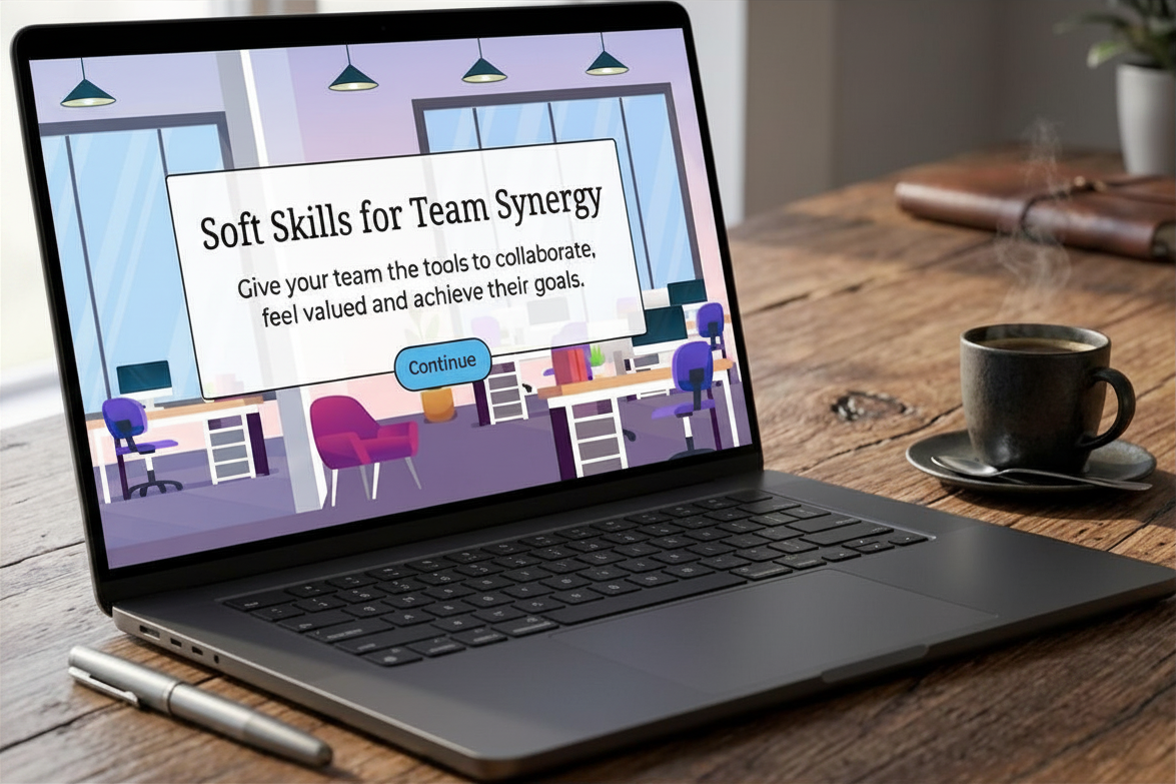
This project was made for a client with teams that have communication issues. When members can’t get on the same page there are real short term and long term business consequences. This approach helps build the right skills for the right outcome.
Soft Skills for Team Synergy
Audience: Team members struggling to collaborate
Responsibilities: problem solving, storyboarding, action mapping, prototyping, development
Tools used: Mind Meister, Figma, Illustrator, Articulate Storyline, FreePik, Google Gemini, ChatGPT, Canva AI
The Problem
Smart Spark, Inc., a fictitious company, was experiencing declining productivity, low employee morale, and strained client relationships due to missed deadlines and high turnover. Employees had lost trust in leadership, leading to poor collaboration, conflict, and disengagement across teams. I conducted a needs analysis which identified trust, ineffective communication, and emotional contagion as the primary drivers of the problem. Managers lacked the skills to address these challenges, which further reinforced siloed work and reduced teamwork.
The Solution
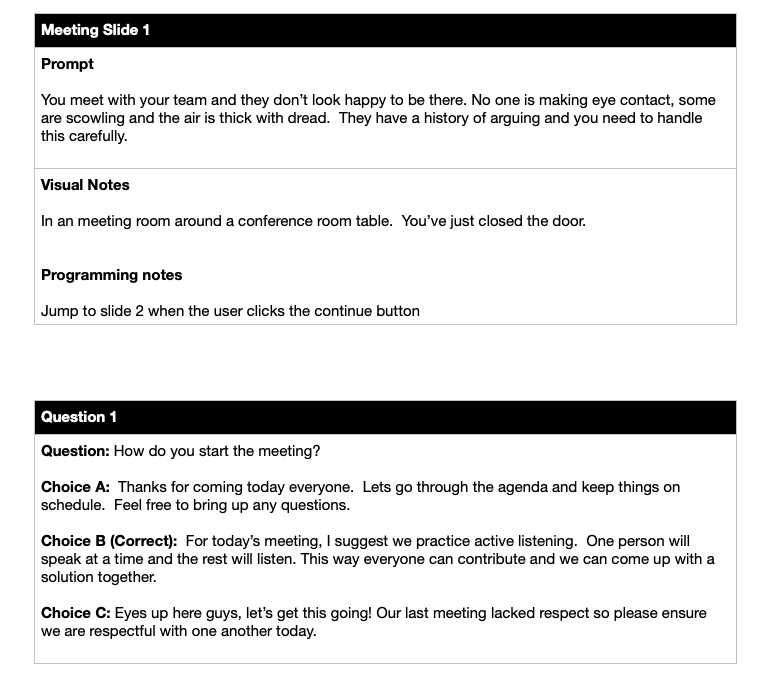
Drawing on my experience as a corporate trainer, I proposed a scenario-based eLearning module that would allow managers to practice communication strategies in a safe, realistic environment. Because the performance gap stemmed from a lack of knowledge and soft skills, the training focused on rebuilding trust, improving team conversations, and increasing manager confidence before applying these skills on the job. To further support learners, I incorporated a mentor character to provide guidance throughout the experience. The client approved the solution, and development began.
Action Mapping
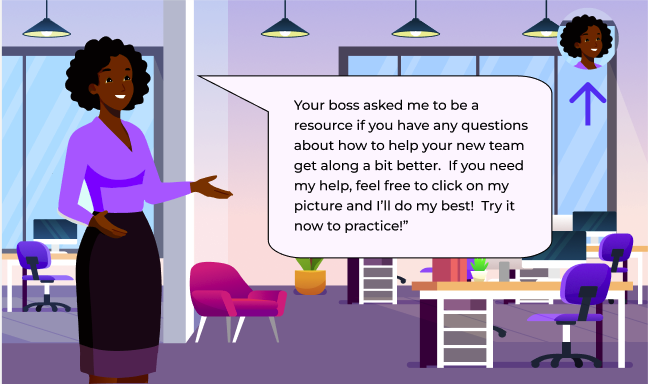
I collaborated with SMEs to solve the attrition problem by focusing on the specific behaviors managers would need to employ in order to foster an environment where employees felt both seen and heard. By improving communication, resolving friction and empowering autonomy, team members could rebuild trust and establish a career path where they were being supported and developed. Following the Kirkpatrick Training Model, managers would complete surveys to evaluate the training's relevance and applicability to their roles. Pre- and post-test scores on communication techniques would be evaluated as well as direct application of soft skills on the job through peer reviews. The turnover metric, which is a lagging indicator, would be reviewed at month 6 and 12 respectively.
Text Based Storyboard
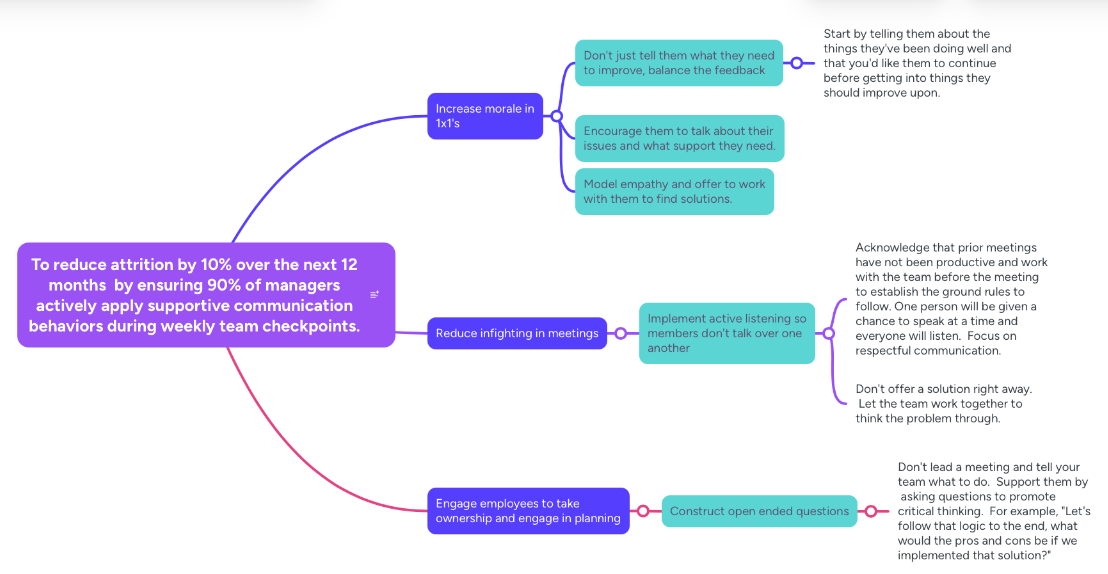
I created a storyboard based on the action map, designing a risk-free practice environment that followed Gagné's 9 Events of Instruction to support an effective learning experience. The module used branching scenarios to let managers practice real workplace conversations, experience the consequences of their decisions, and retry as needed. A mentor character provided optional guidance throughout the experience, while programming notes documented the intended flow for development.
Visual Mockups
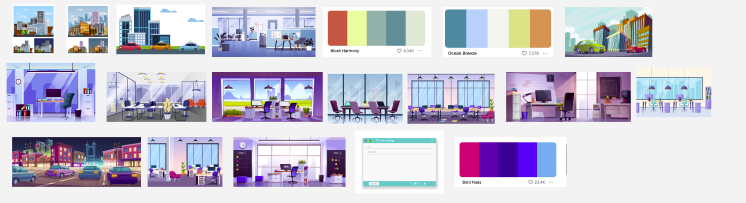
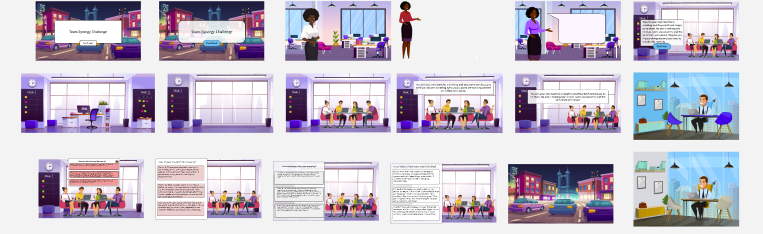
After storyboard approval, I collaborated with SMEs to develop the visual direction and created prototyping wireframesin Figma to explore slide layouts, characters, and overall balance for an engaging learner experience. I applied visual design principles, Mayer’s Principles of Multimedia Learning, and strategies to reduce cognitive load while refining the design approach. Using a mood board, style guide, and feedback from the team, I developed high-fidelity mockupsand used AI-generated character assets refined in Adobe Illustrator to create consistent visuals aligned with the learning objectives.

Interactive Prototype
Once they were satisfied and approved them, I used them to create the interactive prototype in Figma by following the programming instructions from the storyboard. The team was able to test out the design and make suggestions to tailor the experience. The design was approved and I moved on to full development in Articulate Storyline.
Full Development In Articulate Storyline
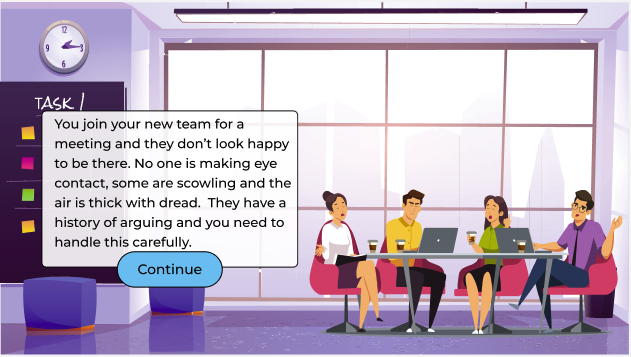
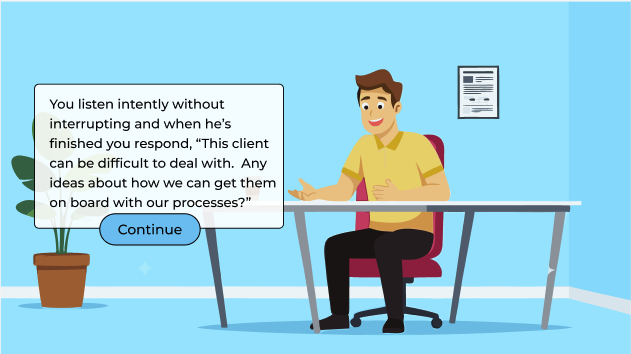
Now that we had a prototype in Figma, it was time to replicate it in Storyline and ensure that the effects and transitions were operating properly. I created three different versions as the team reviewed and made suggestions for things that they wanted to be refined. The three versions were Alpha, Beta and Gold. There was a noticeably smoother feel to the final version and the team was happy with the results.

Results and Key Take Aways
Reach: After creating this module and obtaining feedback, I saw how profoundly impactful this experience can be. As a corporate trainer facilitating live instruction, I’ve seen many skip class due to scheduling issues and rebook weeks later. Everyone I spoke with completed it!
Evolution: As I was developing the module, new AI tools and ideas were coming out underscoring the importance of keeping up to date on trends in the field for efficiency and for providing the best learner experience.
Gamification: Storytelling is a wonderful tool to make learning engaging. By mirroring real life work scenarios and incorporating humor, learners can enjoy the journey even more.